
What's the role of electronic key management systems for car dealerships?


When you think about the things that make a car dealership function, an electronic key management system might not be the first thing that comes to mind.
Without a reliable system, chaos can quickly take the wheel. Misplaced keys, staff hunting for them, customers waiting, and operational efficiency dropping from 60 to zero in seconds.
In 2026, these systems do more than store keys.
They monitor usage in real time, restrict access to authorized staff, and integrate with dealership software, making key management a seamless and trusted part of daily operations.
5 critical roles of electronic key management systems for car dealerships
1. Real-time key tracking
Modern systems go beyond simple storage by continuously monitoring every key in the dealership. Staff and managers can instantly see which keys are in use and who has them.
They can also see when they’re due back. It’s not just on site either. Integration with dealership software and mobile apps means managers can keep an eye on things from anywhere in the world.,
2. Controlled access and security
Electronic key management systems regulate who can access keys and when, preventing unauthorized use.
Advanced 2026 systems use role-based permissions, biometrics, or multi-factor authentication to enhance dependability. This evolution means dealerships can confidently allow temporary staff or multiple locations to access keys without compromising safety or accountability.
3. Operational efficiency
By automating key check-ins and check-outs, these systems cut down the time staff spend searching for keys or logging activity manually.
In 2026, integration with DMS and CRM platforms connects keys to specific sales and service activity, streamlining workflows and helping dealerships provide a faster, more reliable customer experience.
4. Traceability and reporting
Electronic key systems provide built-in traceability, creating a permanent record of activity that supports audits and compliance while giving managers clearer visibility into how vehicles are being used. With advanced dashboards and automated reporting, they can quickly spot slowdowns and adjust vehicle or staff allocation accordingly.
5. Multi-site and hybrid dealership management
Multi-site and hybrid dealership management has become easier as key management systems now provide centralized control across locations.
Cloud-based platforms allow managers to monitor and assign keys in real time, reducing the risk of loss or misallocation while keeping vehicles moving between sales, service, and fleet operations.
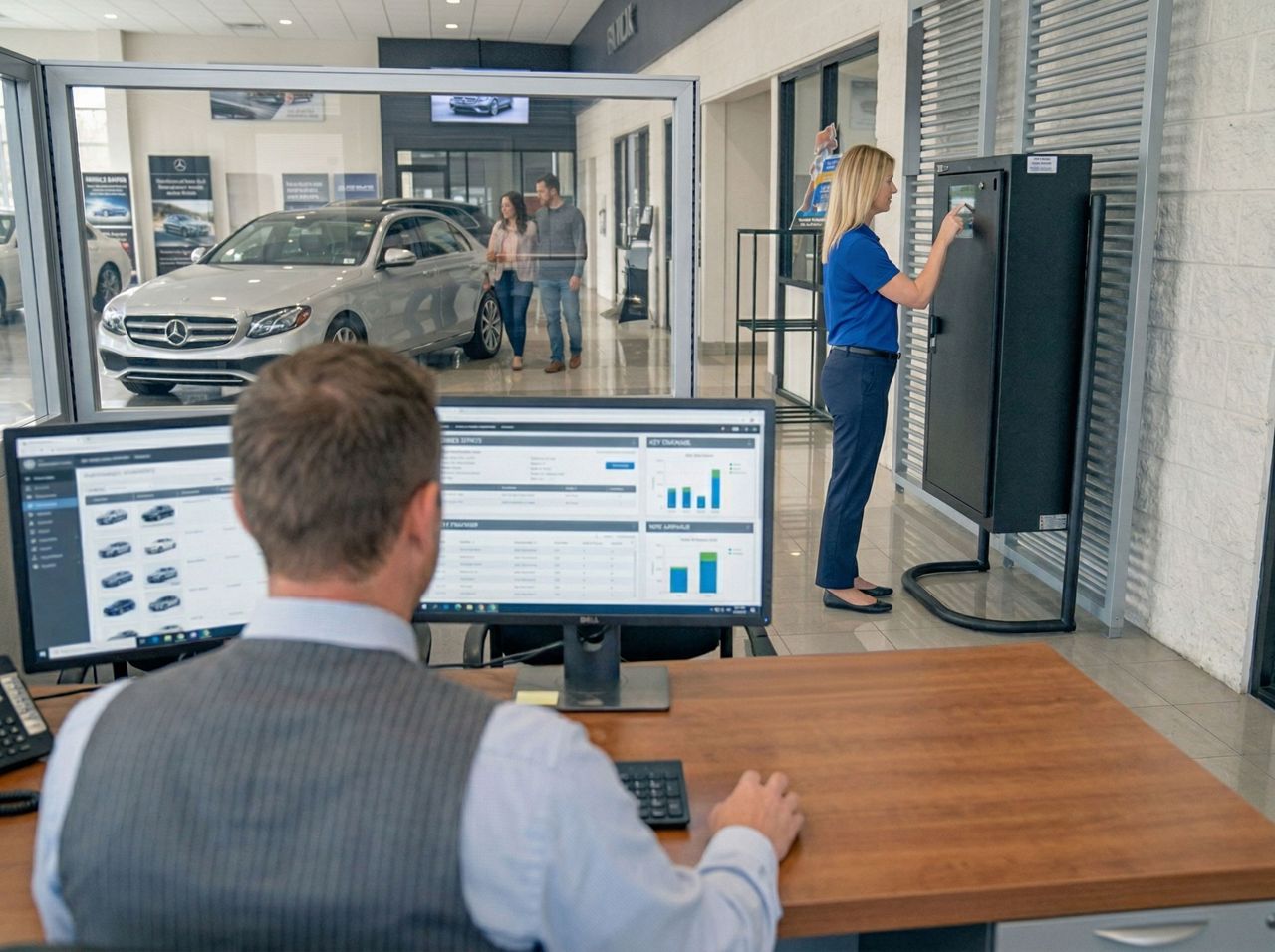
Auditing your current electronic key management systems
If you already have an electronic key management system in place, the real question is whether it’s still fit for purpose. Dealerships have moved on. Your system should have too.
Start with visibility.
Can you see exactly where every key is at any given moment, without asking around? If tracking still relies on guesswork, you’re not getting true real-time control.
Next, look at access. Are permissions tailored to roles, or does everyone effectively have the same access? Modern systems should make it simple to adjust permissions as teams change.
Then check your reporting. Are you actually using the data, or does pulling information feel like a chore? If insights aren’t easy to access, you’re likely missing opportunities to tighten operations.
Finally, think about integration and day-to-day usability. If the system doesn’t connect with your DMS or staff regularly work around it, that’s a strong sign it’s time to evolve.
Is it ever ‘too soon’ to upgrade electronic key management systems?
Years ago, upgrading your systems every two, three, even five years was considered perfectly acceptable. And for the most part, it was. Technology moved steadily, and risks didn’t evolve overnight.
Today, that’s changed. Tech is advancing fast, and so are the threats targeting dealerships. This isn’t like skipping a phone upgrade because you don’t need a slightly better camera. Criminals are more sophisticated, more organized, and more aware of weaknesses in dealership processes.
If your electronic key management system isn’t keeping pace (whether that’s stronger authentication, better system integration, or smarter monitoring) you’re potentially exposing gaps without realizing it.
Upgrading isn’t about chasing the latest feature. It’s about staying ahead of evolving security requirements, and making sure your safeguards are as modern as the risks you’re facing.
Knowing where to start
Choosing an electronic key management system can be difficult, especially when every dealership has different operational demands.
KEYper helps simplify the process by working closely with your team to understand how you operate and where the risks lie, so you can invest in a system that strengthens control and accountability without disrupting the way you work.
We can help
Overhauling your entire key management process can feel overwhelming, but it doesn’t have to be. The first step is knowing exactly where to start.
That’s where KEYper comes in. Our team has the experience and know-how to help automotive businesses review their current key management setup, identify gaps, and map their systems against what’s needed for 2026.
We’re not here just to sell you a system. It’s about finding the right solution that fits the way your dealership actually works. From auditing your current protocols to recommending smarter cabinets, digital tracking, reservations, and access controls, we guide you every step of the way.